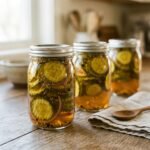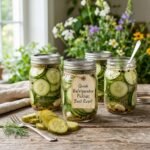
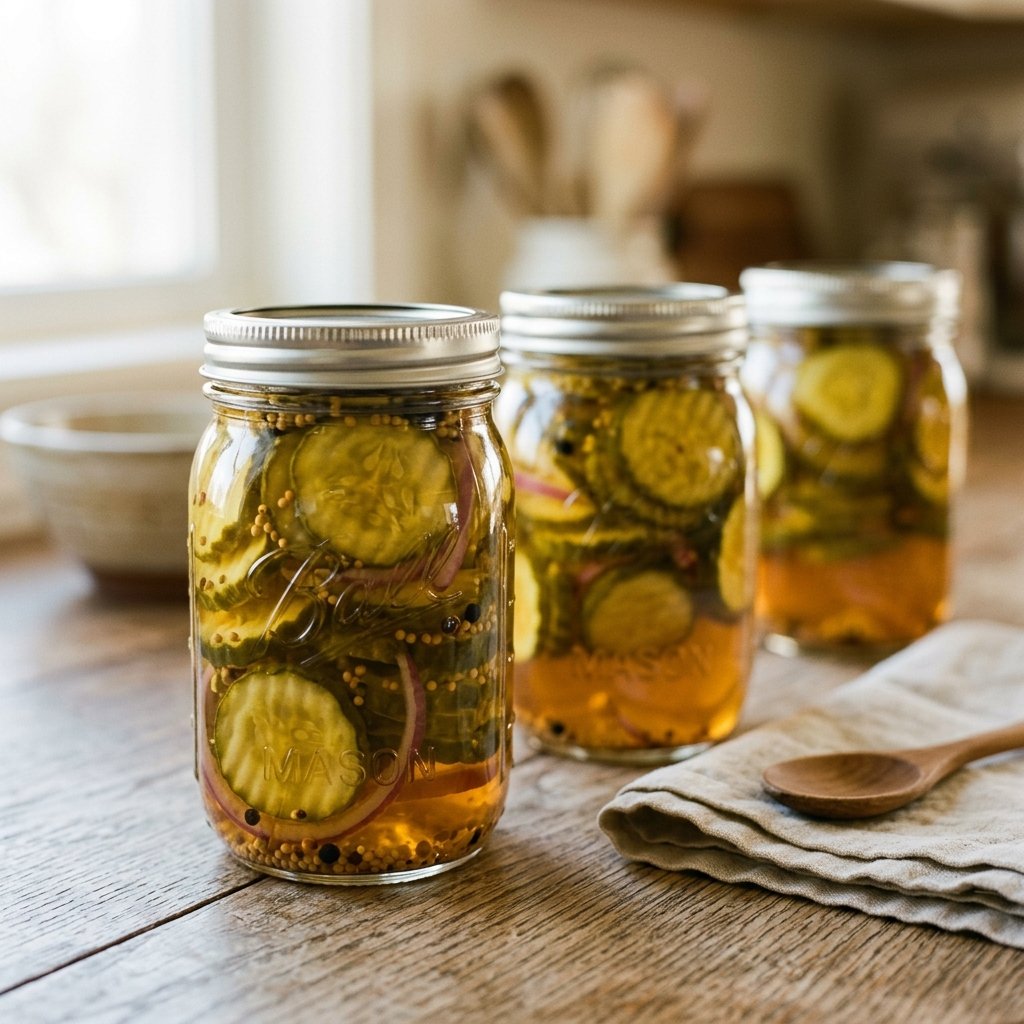
If you’ve been wanting a reliable bread and butter pickle recipe that feels approachable, practical, and genuinely worth making, you’re in the right place. I love how these pickles turn simple cucumbers and onions into glossy, sweet-tangy slices with just enough mustard seed and spice to make every jar taste special. They’re crisp, bright, a little old-fashioned in the best way, and so good tucked into sandwiches or set out next to grilled food.
I make these when cucumbers are abundant and I want something that keeps beautifully in the pantry. The process is straightforward: salt the cucumber slices, make a golden brine, pack the jars, and process them in a water bath so they’re shelf-stable when properly canned. If you’re newer to canning, don’t worry. I’ll walk you through it in a way that feels like a friend talking you through the steps at the kitchen counter.
The finished pickles have that classic bread-and-butter flavor balance: sweet, gently sharp, oniony, and warmly spiced. Once you make a batch, you’ll understand why homemade versions are so hard to beat.
Quick Recipe Info
| Prep time | 30 minutes |
| Cook time | 15 minutes |
| Total time | 2 hours 45 minutes |
| Servings | 32 servings |
| Difficulty | Easy to moderate |
Why You’ll Love It
- The flavor is classic: sweet, tangy, lightly spiced, and full of onion and mustard seed.
- It’s a great way to preserve extra cucumbers when the garden or market is overflowing.
- The recipe uses familiar pantry staples and no complicated equipment beyond basic canning tools.
- These pickles are incredibly versatile for burgers, sandwiches, cheese boards, and snack plates.
- The jars look beautiful lined up on the shelf, making them lovely for gifting too.
Nutritional Benefits and Adaptable Variations
Nutritional Benefits
Bread and butter pickles are more about flavor, preservation, and enjoyment than heavy nutrition, but they do offer a few nice benefits. Cucumbers and onions contribute a small amount of fiber and plant compounds, and a little pickle can add a lot of flavor to a meal without needing rich toppings or sauces. Since these are sweet pickles, they do contain sugar, and because they’re canned in brine, they also contain sodium. I like to think of them as a punchy condiment that adds balance and excitement to everyday meals.
Adaptable Variations
You can gently tailor this recipe to your taste while keeping the canning ratio safe. I sometimes use turmeric for a warmer golden color and celery seed for a more traditional deli-style note. Thinly sliced red onions can be swapped for part of the white onion if you want a slightly deeper flavor, though the color of the brine may shift. For a milder sweetness, you can reduce the sugar a little in a refrigerator-only version, but for shelf-stable canning, it’s best to follow the tested vinegar and acidity balance as written. You can also cut the cucumber slices thicker for a heartier crunch or thinner for a softer, sandwich-ready style.
Ingredients
For the salted vegetables
- 10 cups pickling cucumbers, thinly sliced
- 2 medium onions, thinly sliced
- 1/4 cup pickling or kosher salt
- 8 cups ice
For the brine
- 2 1/2 cups white vinegar, 5% acidity
- 1 1/2 cups apple cider vinegar, 5% acidity
- 2 1/2 cups granulated sugar
- 1 tablespoon mustard seeds
- 1 1/2 teaspoons celery seeds
- 1 teaspoon ground turmeric
Step-by-Step Instructions
- Wash the cucumbers well, trim off the blossom ends, and slice them into even rounds about 1/4 inch thick. Thinly slice the onions and place both vegetables in a large bowl.
- Sprinkle the salt over the cucumbers and onions, toss to coat, then cover with the ice. Let the mixture stand for 2 hours. This step helps draw out excess moisture and keeps the pickles pleasantly crisp.
- While the vegetables rest, prepare your canning setup. Wash four pint jars, lids, and bands. Keep the jars hot and have a water-bath canner ready with simmering water.
- After the resting time, drain the cucumber mixture very well and rinse lightly under cool water to remove excess salt. Drain again thoroughly.
- In a large nonreactive pot, combine the white vinegar, apple cider vinegar, sugar, mustard seeds, celery seeds, and turmeric. Bring the brine to a gentle boil over medium-high heat, stirring until the sugar dissolves completely.
- Add the drained cucumbers and onions to the hot brine. Return the mixture to a simmer and cook for about 5 minutes, just until the vegetables are heated through and slightly glossy but still firm.
- Using a slotted spoon and ladle, pack the hot cucumber and onion mixture into the hot jars, then pour the brine over the top, leaving 1/2 inch headspace. Remove air bubbles, wipe the rims, apply the lids, and screw on the bands to fingertip tight.
- Process the jars in a boiling water bath for 10 minutes, adjusting for altitude if needed. When the time is up, carefully remove the jars and let them cool undisturbed for 12 to 24 hours.
- Check the seals before storing. Any jar that did not seal should be refrigerated and used first. For the best flavor, let the sealed jars rest for at least 1 week before opening so the sweet-and-spiced brine can fully develop.
Tips, Serving Suggestions & Substitutions
Tips
The most important tip is to use very fresh, firm pickling cucumbers and trim the blossom ends. That simple step goes a long way toward keeping your bread and butter pickle recipe crisp instead of soft.
Slice the cucumbers evenly so they pickle at the same rate, and don’t over-simmer them in the brine. Once they look glossy and are heated through, they’re ready for the jars.
Serving Suggestions
These are wonderful on burgers, deli sandwiches, and pulled pork. I also love them chopped into tuna salad, layered on a grilled cheese, or served alongside sharp cheddar, crackers, and smoked meats for a simple snack board.
Substitutions
For shelf-stable canning, keep the vinegar type and acidity level the same and avoid reducing it. You may swap some white onion for sweet onion, and you can slightly adjust the spice profile with a little more celery seed or a pinch of cloves if you enjoy a warmer finish. If you want to experiment more freely with sweetness or spice, make a refrigerator batch instead of a canned one.
Nutrition Information
| Calories | 52 | Carbohydrates | 13 g |
| Protein | 0.5 g | Fat | 0.2 g |
| Saturated fat | 0 g | Cholesterol | 0 mg |
| Sodium | 210 mg | Fiber | 0.5 g |
| Sugar | 11 g | Serving size | About 1/4 cup |
Nutrition values are approximate estimates per serving and can vary based on cucumber size, draining, and exact yield.
Storage & Make-Ahead Tips
Before opening: Store properly sealed jars in a cool, dark place. For best quality, enjoy them within 1 year.
After opening: Refrigerate the jar and use it within 1 month for the best flavor and texture.
Make-ahead flavor tip: Although you can technically eat them sooner, I really think these pickles taste best after at least 1 week in the jar. The flavor becomes rounder, more balanced, and much more developed.
Food-safety note: Always check that jars are properly sealed before pantry storage, and if anything looks cloudy, foamy, leaking, or smells off, discard the contents. Follow standard safe canning practices and altitude adjustments for your area.
FAQ
Why are they called bread and butter pickles?
The name is commonly associated with old-fashioned sweet pickles that were simple, practical, and often served with everyday meals like bread and butter. Whatever the origin, the name now usually means sweet, tangy cucumber pickles with onions and spices.
How do I keep my pickles crisp?
Start with very fresh cucumbers, trim the blossom ends, use the salting-and-ice step, and avoid overcooking. Processing the jars only as long as needed also helps preserve texture.
Can I use regular slicing cucumbers?
You can, but pickling cucumbers usually give better texture and hold up more reliably in canning. If you use slicing cucumbers, choose firm ones with smaller seeds and expect a slightly softer result.
Do I have to wait before eating them?
A waiting period really helps. I recommend letting the jars sit for at least 1 week before opening so the cucumbers can absorb the sweet-and-spiced brine.
Can I make this as refrigerator pickles instead?
Yes. You can prepare the recipe, skip the water-bath processing, cool the jars, and refrigerate them. In that case, keep them chilled and enjoy them within a few weeks.
Final Thoughts
I hope this recipe makes homemade pickling feel a lot more doable and a lot more fun. There’s something so satisfying about turning a pile of fresh cucumbers into neat jars of sweet, tangy pickles you’ll be reaching for again and again. If you make this bread and butter pickle recipe, I’d love to hear how it turned out for you. Feel free to leave a comment, share it with someone who loves canning, and save it to Pinterest for your next batch.
Bread and Butter Pickles Canning Recipe Made Easy!
Ingredients
Equipment
Method
- Wash the cucumbers, trim the blossom ends, and slice them into 1/4-inch rounds. Thinly slice the onions and place both in a large bowl.
- Sprinkle the salt over the cucumbers and onions, toss well, and cover with the ice. Let stand for 2 hours.
- Drain the cucumber mixture and rinse lightly under cool water. Drain thoroughly again.
- Wash four pint jars, lids, and bands. Keep the jars hot and prepare a simmering water-bath canner.
- In a large nonreactive pot, combine the white vinegar, apple cider vinegar, sugar, mustard seeds, celery seeds, and turmeric. Bring to a gentle boil, stirring until the sugar dissolves.
- Add the drained cucumbers and onions to the hot brine. Return to a simmer and cook for about 5 minutes, until heated through and glossy but still firm.
- Pack the hot cucumber and onion mixture into the hot jars with a slotted spoon, then ladle the brine over the top, leaving 1/2 inch headspace.
- Remove air bubbles, adjust headspace if needed, wipe the jar rims, apply the lids, and screw on the bands to fingertip tight.
- Process the jars in a boiling water bath for 10 minutes, adjusting for altitude if needed.
- Remove the jars and let them cool undisturbed for 12 to 24 hours. Check seals before storing.
- Let the sealed jars rest for at least 1 week before opening for the best flavor.