If you’ve been curious about canning pickles at home, I’m here to tell you it’s one of the most satisfying kitchen projects you can take on. There’s something incredibly rewarding about lining up jars of glossy cucumber spears and slices in clear brine, knowing you captured that fresh garden crunch for later. And if crunchy pickles are your goal, a few small choices make a very big difference.
I’ve made enough batches over the years to know that great pickles are never just about the brine. They depend on fresh cucumbers, the right prep, a balanced vinegar mixture, and careful water bath timing. When you combine those basics with a handful of smart habits, you end up with jars that taste bright, savory, and deeply homemade instead of soft or disappointing.
In this guide, I’ll walk you through a dependable dill-style method for water bath canning pickles, along with 12 practical tips I personally rely on for better texture and flavor. Whether this is your first batch or you’re trying to improve your results, I want you to feel confident every step of the way.
Quick Recipe Info
| Prep time | 30 minutes |
| Cook time | 15 minutes |
| Total time | 45 minutes |
| Servings | 4 pint jars |
| Difficulty | Moderate |
Why You’ll Love It
- You get a reliable water bath method that feels approachable, even if you’re new to home canning.
- The brine is clean, bright, garlicky, and classic without overpowering the cucumbers.
- These pickles stay versatile enough for sandwiches, burgers, snack boards, and straight-from-the-jar cravings.
- The step-by-step process focuses on crunch, which is what most of us want most.
- You can make spears or slices depending on how you like to serve them.
- The 12 tips help you avoid common issues like cloudy brine, weak flavor, or soft texture.
Nutritional Benefits and Adaptable Variations
Why these pickles can be a smart pantry staple
Homemade pickles are low in calories and can add bold flavor to simple meals without needing rich sauces or heavy toppings. Cucumbers themselves are light and refreshing, and the dill, garlic, and spices bring plenty of character. Because pickles are preserved in a salty, acidic brine, they can be high in sodium, so I think of them as a flavorful condiment or side rather than something to eat in huge portions.
Easy ways to adapt the flavor
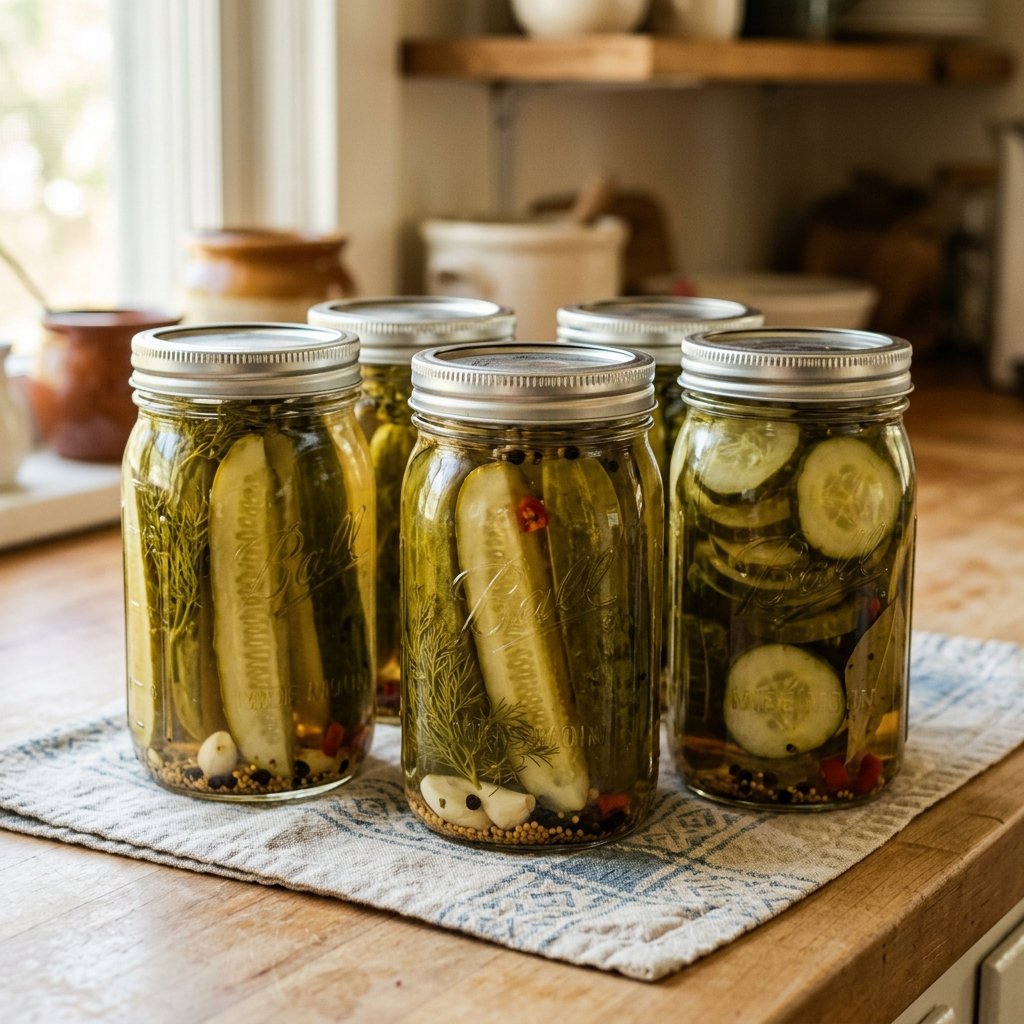
You can keep this batch classic with dill and garlic, or make a few small tweaks depending on your taste. Add red pepper flakes for heat, tuck in a bay leaf for a deeper aromatic note, or use slices instead of spears for sandwich-style pickles. If you love a more old-fashioned spice profile, a pinch of coriander seed can work nicely. For safe canning results, keep the vinegar, water, and salt proportions the same and only vary the dry seasonings and aromatics in small amounts.
Ingredients
For the pickles
- 3 pounds pickling cucumbers, washed and cut into spears or thick slices
- 4 teaspoons dill seeds
- 4 cloves garlic, peeled
- 4 teaspoons mustard seeds
- 2 teaspoons black peppercorns
- 4 small bay leaves
- 1 teaspoon crushed red pepper flakes, optional
For the brine
- 3 cups distilled white vinegar, 5% acidity
- 3 cups water
- 3 tablespoons pickling salt
For crispness
- Ice and cold water for soaking the cucumbers
Step-by-Step Instructions
- Wash the cucumbers well, trim a thin slice from the blossom end of each one, and cut into spears or thick slices. Soak them in ice water for 2 hours, then drain well. This is one of my favorite tricks for a firmer finished pickle.
- Prepare your water bath canner, jars, lids, and bands according to the manufacturer’s directions. Keep the jars hot until you are ready to fill them.
- In a nonreactive pot, combine the vinegar, water, and pickling salt. Bring the brine to a gentle boil, stirring until the salt dissolves completely.
- Add 1 teaspoon dill seeds, 1 garlic clove, 1 teaspoon mustard seeds, 1/2 teaspoon peppercorns, 1 bay leaf, and a pinch of red pepper flakes if using to each hot pint jar.
- Pack the cucumbers into the jars snugly but without crushing them. Leave 1/2 inch headspace at the top of each jar.
- Pour the hot brine over the cucumbers, maintaining 1/2 inch headspace. Remove air bubbles with a nonmetal utensil and adjust the brine if needed.
- Wipe the jar rims, apply the lids and bands to fingertip tightness, and place the jars in the boiling water bath.
- Process the jars for 10 minutes once the water returns to a full boil, adjusting for altitude if required by a trusted canning source.
- Carefully remove the jars and let them cool undisturbed for 12 to 24 hours. Check the seals, then store the sealed jars in a cool, dark place.
- For best flavor, let the pickles rest at least 1 week before opening. They get even better after 2 to 3 weeks as the brine settles into the cucumbers.
Tips, Serving Suggestions & Substitutions
Best tip for crunchy pickles
Use very fresh pickling cucumbers and always trim the blossom end. If I could give you only one tip for canning pickles, it would be this. Older cucumbers soften faster, and the blossom end contains enzymes that can affect texture.
Serving suggestions
These pickles are perfect with burgers, fried chicken sandwiches, deli-style wraps, potato salad, or a simple cheese board. I also love chopping them into tuna salad or egg salad for extra brightness and crunch.
Simple substitutions
You can swap dill seeds for a few fresh dill sprigs if you prefer, though seeds offer a more stable pantry option. If you don’t want heat, leave out the red pepper flakes. For a slightly different look and use, cut the cucumbers into coins instead of spears, but keep them thick enough to stay crisp.
Nutrition Information
| Calories | 35 | Carbohydrates | 7 g |
| Protein | 1 g | Fat | 0 g |
| Saturated Fat | 0 g | Cholesterol | 0 mg |
| Sodium | 680 mg | Fiber | 1 g |
| Sugar | 3 g | Serving size | About 1/4 jar |
Nutrition values are approximate estimates per serving and can vary with cucumber size and exact yield.
Storage & Make-Ahead Tips
Before opening: Store sealed jars in a cool, dark place for up to 1 year for best quality. Always check that the seal is intact before opening.
After opening: Refrigerate the jar and use the pickles within a few weeks for the best texture and flavor.
Make-ahead flavor tip: I know it’s tempting to open a jar right away, but the flavor really improves after at least 1 week of resting time. Two weeks is even better.
Important safety note: For shelf-stable canned pickles, use tested proportions of 5% acidity vinegar, proper headspace, and correct processing times. If a jar does not seal, refrigerate it and enjoy it first.
FAQ
1. Why did my pickles turn out soft?
Soft pickles usually come from older cucumbers, skipping the blossom-end trim, overprocessing, or using cucumbers that sat too long before canning. Starting with very fresh pickling cucumbers makes the biggest difference.
2. Can I use regular table salt instead of pickling salt?
I recommend pickling salt because it dissolves cleanly and helps keep the brine clear. Table salt can contain additives that may cloud the liquid and affect the final look.
3. How long should I wait before eating canned pickles?
You can technically eat them sooner, but I find they taste much better after 1 to 2 weeks. That resting time gives the brine a chance to fully season the cucumbers.
4. Can I change the vinegar-to-water ratio?
For safe water bath canning, it’s best not to reduce the vinegar or otherwise weaken the acidity unless you’re following a tested recipe from a trusted canning authority. Flavor adjustments are safest when limited to spices and aromatics.
5. Is cloudy brine always a problem?
Not always. A little cloudiness can come from spices or mineral content in water, but spoilage signs are different and may include off odors, leaking, unsealed lids, or unusual growth. When in doubt, do not taste questionable canned food.
Final Thoughts
I really believe canning pickles becomes easier and more enjoyable with every batch. Once you see how much difference fresh cucumbers, careful packing, and a properly balanced brine can make, you’ll feel far more confident about filling your pantry with jars you’re proud of. If you try this method, I’d love to hear how your pickles turn out. Share your results, pass the recipe along to a fellow pickle lover, and save it to Pinterest so it’s ready the next time cucumbers are in season.
Water Bath Canning Pickles: 12 Tips for Crunchy Pickles That Never Disappoint
Ingredients
Equipment
Method
- Wash the cucumbers well, trim a thin slice from the blossom end of each one, and cut into spears or thick slices. Soak them in ice water for 2 hours, then drain well.
- Prepare the water bath canner, jars, lids, and bands according to the manufacturer’s directions. Keep the jars hot until ready to fill.
- In a nonreactive pot, combine the vinegar, water, and pickling salt. Bring to a gentle boil, stirring until the salt dissolves.
- Add 1 teaspoon dill seeds, 1 garlic clove, 1 teaspoon mustard seeds, 1/2 teaspoon peppercorns, 1 bay leaf, and a pinch of red pepper flakes if using to each hot pint jar.
- Pack the cucumbers into the jars snugly but without crushing them, leaving 1/2 inch headspace.
- Pour the hot brine over the cucumbers, maintaining 1/2 inch headspace. Remove air bubbles and adjust the brine if needed.
- Wipe the rims, apply the lids and bands to fingertip tightness, and place the jars in the boiling water bath.
- Process for 10 minutes once the water returns to a full boil, adjusting for altitude if required by a trusted canning source.
- Remove the jars and let them cool undisturbed for 12 to 24 hours. Check the seals, then store the sealed jars in a cool, dark place.
- Let the pickles rest at least 1 week before opening for best flavor.